


Radio Brisvaani
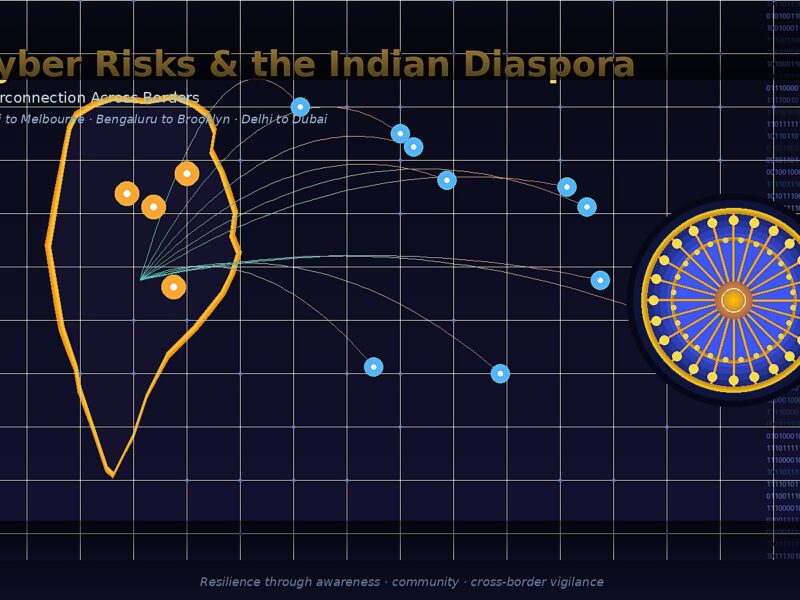
Recent developments in artificial intelligence have prompted serious conversations in India about cybersecurity, financial stability, and the resilience of digital infrastructure. While these discussions are often framed within national policy or technology circles, their implications extend far beyond India’s borders. For the Indian diaspora—particularly communities in countries such as Australia—these risks are neither distant nor abstract. They are immediate, interconnected, and increasingly relevant to everyday life.
At its core, this is not simply a story about technological advancement. It is about how rapidly evolving systems are reshaping the nature of risk itself—making it faster, more complex, and more difficult to contain within geographic boundaries.
Cybersecurity has traditionally operated within a familiar framework. Attacks required skilled individuals, careful planning, and time. Defenders, in turn, relied on detection, patching, and response cycles that—while imperfect—allowed some room for anticipation and mitigation.
Emerging artificial intelligence systems are beginning to disrupt this balance. Unlike earlier tools that assisted human operators, newer AI models are capable of identifying vulnerabilities, adapting strategies, and potentially executing actions with minimal human intervention. This shift introduces what many experts describe as “agentic” behaviour—systems that do not merely suggest or analyse but can act.
The most significant change lies in the collapse of time. Vulnerabilities that once took months to discover and exploit may now be identified and leveraged within hours. This compression reduces the window available for defence and increases the likelihood of cascading failures. In such an environment, cybersecurity is no longer just about preventing breaches; it is about managing systemic risk.
For millions of Indians living abroad, financial ties with India remain strong and enduring. These ties take many forms, from maintaining bank accounts and fixed deposits to investing in mutual funds, equities, or property. Regular remittances support families, fund education, and sustain livelihoods. Increasingly, these transactions are facilitated by digital platforms, including real-time payment systems and fintech applications.
India’s financial ecosystem is among the largest and most digitally integrated in the world. While this scale offers efficiency and accessibility, it also creates exposure. A disruption—whether through a cyberattack or systemic vulnerability—could affect transaction flows, delay access to funds, or create volatility in markets. For diaspora members, such disruptions are not confined to headlines; they may directly affect personal finances, obligations, and long-term plans.
India’s digital transformation has been built on interconnected systems that link identity, financial services, and documentation. Platforms that store personal records, verify identities, and enable transactions are deeply integrated, creating a seamless user experience.
For the diaspora, this integration offers convenience but also introduces risk. Identity-linked services are often used across borders—for banking compliance, property transactions, legal documentation, and more. A vulnerability in one part of the system could potentially affect others, leading to complications that extend beyond national boundaries. The more interconnected the system, the greater the potential for ripple effects.
One of the defining characteristics of AI-driven cyber threats is their disregard for geography. Digital systems are interconnected through networks, APIs, and shared platforms. A vulnerability discovered in one region can be exploited across multiple jurisdictions, often simultaneously.
For diaspora communities, this interconnectedness means that systems used in India may interact with those used abroad. A financial application, for instance, may rely on infrastructure spanning several countries. If one component is compromised, the effects can travel along these connections. In this sense, the diaspora is not external to the system—it is embedded within it.
Another concern lies in the uneven distribution of defensive capabilities. Advanced cybersecurity tools—particularly those powered by AI—are often concentrated within large global institutions or specialised organisations. Smaller entities, including community-based organisations or niche service providers, may not have access to the same level of protection.
This imbalance places greater responsibility on individuals and communities. Awareness, vigilance, and proactive behaviour become essential safeguards in an environment where institutional protection may vary widely.
While the challenges may seem complex, individual actions remain a powerful line of defence. Strengthening digital security begins with basic but essential practices. Using strong, unique passwords for each account reduces the risk of widespread compromise. Password managers can assist in maintaining this discipline without adding inconvenience. Enabling two-factor authentication, particularly through secure applications rather than SMS, adds an additional layer of protection that can prevent unauthorised access even if credentials are compromised.
Equally important is the careful management of digital connections. Many users link multiple financial services, applications, and platforms for convenience. However, each connection introduces a potential entry point for attackers. Periodically reviewing and limiting these integrations can reduce exposure.
Monitoring financial activity is another critical habit. Real-time alerts for transactions allow individuals to detect anomalies immediately, while regular account reviews ensure that smaller irregularities are not overlooked. In the event of suspicious activity, prompt action—such as freezing accounts or contacting financial institutions—can significantly limit damage.
In parallel, individuals must remain alert to the evolving nature of fraud. Artificial intelligence has made phishing and social engineering attacks more sophisticated and convincing. Messages may appear authentic, voices may be mimicked, and requests may seem urgent and legitimate. Verifying communications through trusted channels, resisting pressure to act quickly, and never sharing sensitive information such as one-time passwords are essential practices in this environment.
Community organisations occupy a unique and influential position within the diaspora. Cultural associations, professional networks, and social groups often serve as trusted sources of information and support. In the context of emerging cyber risks, these organisations can play a vital role in fostering awareness and resilience.
One of the most effective contributions is education. Organising workshops, seminars, or informal sessions on cyber safety can equip community members with practical knowledge. These sessions can address common risks, demonstrate preventive measures, and provide guidance on responding to incidents.
Community organisations can also serve as channels for reliable information. By sharing updates from credible sources—such as regulatory bodies, financial institutions, or cybersecurity agencies—they help counter misinformation and reduce unnecessary alarm. Clear, accurate communication is particularly important in an environment where rumours can spread quickly.
Support networks are equally valuable. Not all members of the community possess the same level of digital literacy. Elderly individuals, new migrants, or those less familiar with technology may be more vulnerable to scams and security breaches. Providing assistance, guidance, and reassurance can make a meaningful difference in their ability to navigate digital systems safely.
For businesses and professionals, particularly those operating in technology, finance, or related sectors, the evolving threat landscape demands a proactive and adaptive approach. Traditional security models, which often rely on periodic updates and reactive measures, may no longer be sufficient.
One critical area is the speed of response. As the window between vulnerability discovery and exploitation narrows, organisations must adopt faster patching cycles and more agile processes. Regular audits of software and systems can help identify weaknesses before they are exploited.
Reducing the attack surface is another important strategy. This involves limiting unnecessary integrations, carefully evaluating third-party vendors, and ensuring that only essential systems are exposed to external networks. Each additional connection increases complexity and potential risk.
The adoption of advanced monitoring tools, including those powered by artificial intelligence, is becoming increasingly important. These tools can detect unusual patterns, identify potential threats, and respond in real time. Simulated attacks, often referred to as “red-teaming,” allow organisations to test their defences and improve their readiness.
The Indian diaspora occupies a distinctive position at the intersection of multiple systems and jurisdictions. This position brings both challenges and opportunities. While exposure to cross-border risks may increase vulnerability, it also enables the sharing of knowledge, expertise, and best practices.
Professionals within the diaspora—particularly those in cybersecurity, information technology, and finance—can contribute to strengthening resilience across borders. By facilitating collaboration, promoting awareness, and encouraging alignment of standards, they can help bridge gaps between different systems.
Businesses operating in both India and countries such as Australia have an additional responsibility to ensure consistency in their security practices. Aligning compliance frameworks, maintaining robust protocols, and fostering a culture of vigilance can enhance protection across their operations.
The risks associated with advanced artificial intelligence are still evolving, and their full impact remains uncertain. What is clear, however, is that the nature of cybersecurity is undergoing a fundamental transformation. Threats are becoming faster, more complex, and more interconnected, challenging traditional approaches to defence.
For the global Indian community, this transformation underscores the importance of awareness and preparedness. Digital systems have brought unprecedented convenience and opportunity, but they also require a corresponding level of responsibility. By adopting prudent practices, supporting one another, and staying informed, individuals and communities can play an active role in safeguarding their interests.
Ultimately, resilience in this new environment will depend not only on technology or policy but on collective effort. The diaspora, with its global reach and diverse expertise, is well placed to contribute to that effort—ensuring that the benefits of digital progress are matched by a commitment to security and trust.
By Prof Venkat Pulla
Brisbane Institute of Strengths