

Radio Brisvaani
Brisbane, September 23 (MCCQ Newsdesk)
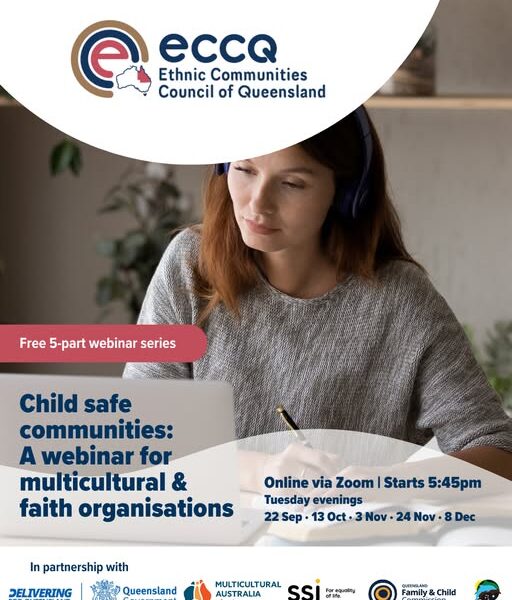
The Ethnic Communities Council of Queensland (ECCQ) and partner organisations held a free online webinar on September 22 to help community and faith-based organisations understand Queensland’s new Child Safe Organisations law and strengthen safeguarding practices for children and young people.
The webinar, titled Understanding Queensland’s New Child Safe Organisations Law, was designed for faith group leaders, clergy, Imams, board members, volunteers, staff and community representatives from culturally and linguistically diverse communities across Queensland.
The session focused on Child Safe Standards 1 and 10 and provided practical guidance on organisational responsibilities and ways to strengthen child safeguarding.
Key topics included the principle that child safeguarding is everyone’s responsibility, leadership and responsibilities, creating culturally safe and inclusive environments, practical steps to improve safeguarding and using a self-assessment tool to begin the process.
The organisers said the webinar was intended to help organisations understand what the new law means for them and how they can create safer environments for children and young people, regardless of the size of the organisation.
The online session was held on September 22, 2026, with registration and log-in from 5.45pm, the webinar beginning at 6pm and concluding at 7pm.
The webinar was presented in partnership with the Community Leaders Group, Queensland Family and Child Commission, Settlement Services International, Multicultural Australia, Ethnic Communities Council of Queensland, Pacific Island Council of Queensland and Multicultural Affairs Queensland.
The programme placed particular emphasis on embedding Child Safe Standards into everyday organisational practices and developing environments where children feel safe, respected, valued and heard.
The session also encouraged organisations to consider their existing safeguarding practices and use the self-assessment tool as a starting point for identifying areas requiring further attention.
The webinar was offered free of charge.