

Radio Brisvaani
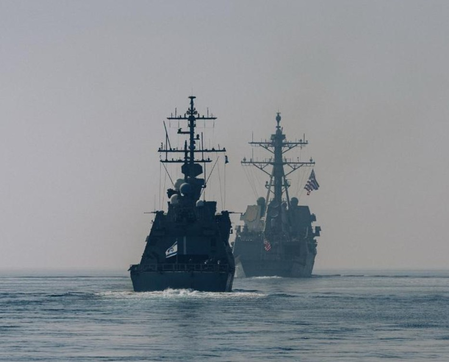
Washington, Feb 12 (IANS) Underscoring the strategic importance of the US naval support facility at Diego Garcia, lawmakers and a senior State Department official have said that safeguarding Indian Ocean sea lanes is central to countering China’s growing influence in the Indo-Pacific.
During a House subcommittee hearing on South and Central Asia, Congressman Bill Huizenga said: “The Indian Ocean is one of the busiest maritime corridors on the earth, carrying the lifeblood of global commerce and energy, including more than 80 per cent of global seaborne oil trade.”
“Safeguarding these sea lanes through enhanced naval cooperation with partners and allies will only serve to counter China’s growing influence and limit its malign behaviour in the region,” he added.
Huizenga stressed the importance of the US naval base in the region. “I see the importance of our naval base on Diego Garcia in the middle of the Indian Ocean,” he said, adding that “Preserving America’s military fortitude in the region will deter Chinese coercion, prevent piracy, and ensure the free flow of American and world trade.”
Assistant Secretary of State for South and Central Asian Affairs Paul Kapur echoed the strategic framing, placing the Indian Ocean at the heart of broader Indo-Pacific policy.
“The Indian Ocean is actually the — the Indo piece of the Indo Pacific,” Kapur said. “One of the insights of that term is that it recognises that this is a holistic — we have to take a holistic approach to the region.”
“We think about the Pacific, it’s not in isolation, but it actually connects all the way to the — to the Indian Ocean and even to the east coast of Africa,” he added.
On Diego Garcia specifically, Kapur said: “Diego Garcia is in kind of in the — in the middle of the ocean, but it’s a very important outpost for projecting air power, particularly.”
“The President has said that it’s a crucial asset,” he said.
Lawmakers also raised concerns about China’s expanding infrastructure footprint across Indian Ocean states.
Kapur warned that smaller regional countries can have “outsized impact on trade and energy flows” because of their geography and stressed the importance of strategic autonomy.
“It’s very important that those countries are able to maintain their freedom of action and not be coerced by China by predatory lending,” he said.
Citing Sri Lanka’s Hambantota Port, he noted: “If you think about Sri Lanka and Hambantota Port, they have a 99-year lease on it. Those are the kinds of dangers that we see with Chinese development schemes.”
Asked about Chinese activity in the Maldives, Kapur acknowledged: “There’s been some Chinese investment there,” adding Beijing is “interested for sure.”
He said Washington must provide viable alternatives.
“We need to be able to offer alternatives, high-quality, transparent, non-coercive alternatives,” Kapur said, pointing to US financing tools, technology, and private sector engagement.
The exchanges highlighted bipartisan concern over China’s efforts to expand economic and strategic leverage across maritime chokepoints in the Indian Ocean — a region critical to global energy supplies and trade flows.
Diego Garcia, located in the British Indian Ocean Territory, has served for decades as a key US logistics and air operations hub supporting missions across the Middle East, Africa and Asia.
The Indian Ocean’s sea lanes connect energy producers in the Gulf with markets in Asia and beyond, making control and access to maritime infrastructure central to strategic competition between Washington and Beijing.
–IANS
lkj/sd/