

Radio Brisvaani
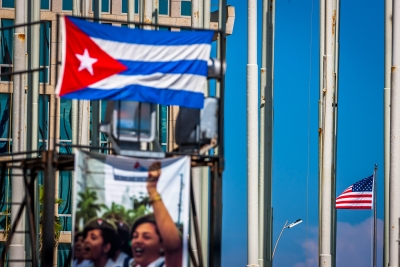
Havana, July 7 (IANS) Cuba’s request for the UN General Assembly (UNGA) to debate the US blockade at its session reflects the imminent threat facing the island, an official said.
The Cuban Foreign Ministry’s director general of Multilateral Affairs and International Law, Pedro Luis Pedroso, told reporters the scenario presented to justify the debate “is not a hypothetical situation of aggression. It is not based on a simple risk assessment.”
The debate, to be held on Tuesday, will serve to denounce “the aggressive actions of the US government” against the island, including “the threat of direct military aggression,” said Pedroso.
At the debate, Havana will present the impact of Washington’s restrictions on fuel supplies and the tightening of the economic, trade and financial blockade against the island. These measures, Cuban authorities claim, constitute an act of genocide, collective punishment, and a violation of human rights and international humanitarian law, reports Xinhua news agency.
According to the diplomat, the restrictions on fuel supplies to the island are equivalent, “in practical terms,” to a naval blockade.
The US administration decided in January to sanction countries that supply fuel to Cuba, which relies heavily on oil imports. That policy, said Pedroso, contravenes international law, including rules applicable during armed conflicts.
Restrictions on the delivery of humanitarian aid also violate international law, he said, noting that the US actions against Cuba encompass economic, political and information-related dimensions, as well as the possibility of military aggression.
Cuba “is not, and could not be, as we have said time and again, a threat to the United States,” Pedroso stressed, adding that the debate at the UNGA would make that clear.
Havana, he said, hopes the UNGA will hold a “broad, in-depth and substantive” debate and reaffirm the principles of the UN Charter, including the sovereign equality of states, respect for territorial integrity, political independence, non-interference in internal affairs, rejection of the threat or use of force, and the peaceful settlement of disputes.
–IANS
int/rs