

Radio Brisvaani
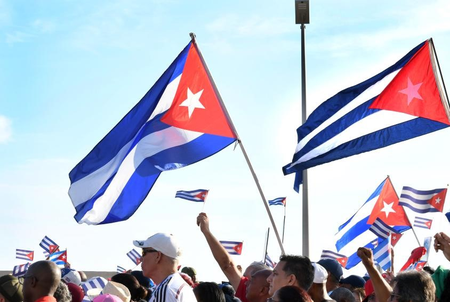
Havana, June 16 (IANS) The US embargo against Cuba has caused incalculable humanitarian damage and become the main obstacle to the Caribbean country’s social development, local media reported.
Citing a study by the Center for Economic and Policy Research, Cuban online news outlet Cubadebate said Cuba’s infant mortality rate rose from 4 deaths per 1,000 live births in 2018 to 9.9 in 2025, an increase of 148 per cent.
The report says that the sharp rise in infant mortality during that period may have been mainly caused by the tightening of US sanctions against Cuba, which began during US President Donald Trump’s first term in 2017, Xinhua news agency reported.
Cuban officials, including Foreign Minister Bruno Rodriguez and Deputy Public Health Minister Carilda Pena, have recently denounced the impact of the US embargo on Cuba’s healthcare system, particularly the effects of executive orders issued on Jan. 29 and May 1 this year.
According to official statistics cited by Cubadebate, the survival rate for children with cancer in Cuba has fallen from 85 per cent to 65 per cent since the United States imposed restrictions on oil supplies to the island and intensified its sanctions.
The US measures, described by Havana as “collective punishment,” have affected more than 100,000 patients awaiting surgery, including 5,152 cancer patients and nearly 12,000 children, the outlet said.
Cuba’s Public Health Ministry has also reported adverse impacts on 2,888 patients receiving hemodialysis, whose treatment depends on supplies, water and specialised equipment.
The restrictions have made it harder for Cuba to obtain raw materials, equipment and financial resources needed to sustain domestic production of vaccines, basic medicines and diagnostic tools for diseases such as cancer, Cubadebate said.
The US oil restrictions have worsened Cuba’s energy crisis, with power outages exceeding 20 hours in Havana and a daily electricity shortfall of about 2,000 megawatts, the outlet said.
So far in 2026, Cuba has received only one fuel shipment, delivered by Russian tanker Anatoly Kolodkin, which carried 100,000 metric tonnes of crude oil.
The fuel crisis has prevented more than 100,000 children from receiving state-subsidized milk, as transport from production centers to cities has been disrupted, according to food industry officials cited by Cubadebate.
In addition, 170 containers of essential goods worth 6.3 million US dollars have not been distributed across Cuba.
Humanitarian organizations, including the United Nations Development Programme, the United Nations Children’s Fund and the World Food Programme, have also reported difficulties distributing containers carrying food aid in Cuba, Cubadebate said.
–IANS
int/rs